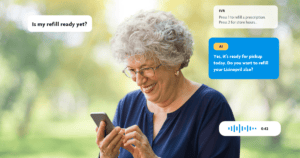


Patients are already turning to AI for health answers—often before they speak with a pharmacist, schedule an appointment, or step into a pharmacy. As AI becomes an early and influential touchpoint in the patient journey, OpenAI’s recent introduction of ChatGPT Health signals a shift toward more structured, health-focused experiences built around how patients already seek information.
Globally, 230 million people ask health and wellness-related questions on ChatGPT every week, according to OpenAI. (OpenAI)
This evolution marks a new phase in patient engagement. For pharmacists, it presents a timely opportunity to support better-informed patients, reinforce trust, and position the pharmacy as a critical source of clarity, guidance, and care.
What is ChatGPT Health?
ChatGPT Health is a health-focused extension of ChatGPT designed to combine AI’s conversational intelligence with users’ personal health information in a secure, dedicated space. Users can upload medical records and connect data from wellness platforms like Apple Health, MyFitnessPal, and Function to get clearer insights into lab results, prepare for appointments, explore diet and exercise strategies, and navigate insurance details.
The expanding role of AI in patients’ health
Even before ChatGPT Health, millions were asking AI health-related questions daily.
OpenAI reports over 40 million daily health-related queries on the platform, with people seeking everything from symptom explanations to medication questions and insurance navigation. (TechRadar)
OpenAI’s introduction of ChatGPT Health signals a shift from casual health curiosity to more structured, personalized health exploration. This isn’t about replacing clinicians or pharmacists. It’s about meeting patients where they already are looking for fast, accessible answers and helping guide them toward better decisions and better outcomes.
For pharmacists, this moment can feel uncertain. Concerns around data security, misinformation, and patient trust are valid. But it also presents a meaningful opportunity. As AI tools become more common, pharmacists are uniquely positioned to turn information into insight, questions into clarity, and curiosity into action.
At the same time, research suggests many pharmacists have not yet integrated AI into practice and remain cautious about relying on it for clinical decisions.
How does this impact pharmacists?
For pharmacists, this moment can feel uncertain. Concerns around data security, misinformation, and patient trust are valid. But it also presents a meaningful opportunity. As AI tools become more common, pharmacists are uniquely positioned to turn information into insight, questions into clarity, and curiosity into action.
At the same time, research suggests many pharmacists have not yet integrated AI into practice and remain cautious about relying on it for clinical decisions.
In one study, most pharmacists indicated they were unlikely to make direct patient-care decisions based on chatbot outputs, largely due to trust, accuracy, and usability concerns. (PMC)
That puts pharmacists in a powerful position to shape how AI can be responsibly used by their patients. The future of patient care won’t be AI or pharmacists; it will be AI and pharmacists, working together to support more informed, proactive, and engaged patients.
How ChatGPT Health can help pharmacists & patients
ChatGPT Health represents a broader shift toward more informed, engaged patients. However, these tools will not replace pharmacists, instead they will expand what a pharmacist can offer.
Think of it this way – AI helps patients prepare, while pharmacists help patients progress.
That partnership leads to better decisions, stronger relationships, and better outcomes.
1. Patients will come with AI-gathered questions
Instead of fearing AI, embrace it as a reality. Patients will increasingly use tools like ChatGPT Health to research symptoms, lab results, OTC options, wellness plans, and drug interactions, sometimes before seeking professional care. This means pharmacists’ expertise in interpreting, contextualizing, and validating that information is more valuable than ever.
2. A better starting point for conversations
Think of ChatGPT Health as a starting point, not a substitute, for health information. A patient who has already looked up diet strategies or exercise plans can bring that into your consultation—and you can help refine it, correct misconceptions, and turn awareness into action.
For example:
- Use patients’ wellness plans to tailor preventive care conversations.
- Validate OTC selections based on evidence and patient history.
- Coach patients to ask better questions of AI tools, focusing on context, not just answers.
As the most accessible care providers, community pharmacists are perfectly positioned to help bridge AI-generated information and safe, personalized care.
3. Proactive, preventive care becomes easier
AI tools can help patients track trends, understand test results, and prepare for appointments, but they’re not clinicians. That’s where pharmacists excel. Pairing ChatGPT Health insights with a pharmacist’s clinical judgment can help patients:
- Understand lab variations
- Recognize medication side-effect patterns
- Build realistic wellness goals
- Navigate insurance and cost questions
- Learn how to use AI tools responsibly
This collaboration promotes preventive, not just reactive, care.
Addressing common concerns
It’s reasonable to worry about accuracy, privacy, and patient safety. Experts highlight that ChatGPT Health is not a diagnostic tool, and health data shared is not HIPAA-protected in the same way as clinician-held records. (TIME)
That’s actually an opportunity: pharmacists can educate patients to use AI responsibly, as a supplement, not a substitute, for professional care.
Pharmacists should also be aware of occurrences of “AI hallucinations”, which are instances where an AI model confidently answers a question with inaccurate information. Your role is to safeguard against that by correcting errors and helping patients understand the context.
How pharmacists can prepare & lead
Be curious. Be proactive. Be the expert.
Here are practical steps you can take:
- Encourage patients to bring AI-derived insights to consultations.
- Coach patients on which questions to ask and why.
- Educate your team on how to interpret and respond to AI-generated health content.
- Stay informed about evolving AI regulations and privacy standards.
A future where AI and pharmacists thrive together
Instead of competing against AI, the pharmacy profession should embrace it as a partner in better patient engagement and outcomes. ChatGPT Health isn’t a threat—it’s a tool that can amplify your impact by empowering patients with information and bringing them back to you for clinical context, interpretation, and action.
AI won’t replace pharmacists, but enable those who learn how to work with AI to provide more elevated care.
Try it for yourself
Join the ChatGPT Health waitlist and explore the platform yourself. Begin imagining how this and other emerging AI tools can support your pharmacy practice and help further your patient relationships.
Interested in leveraging AI in your pharmacy?
Hear industry experts share practical ways AI can be used in the pharmacy to save time while maintaining quality patient care.