

The first quarter of 2026 brought a strong wave of FDA activity, with new medication approvals and expanded indications leading the way. For community pharmacies, this means more than just new names on a list – it means new counseling opportunities, evolving payer dynamics, and continued pressure to stay clinically current.
This blog highlights key medication approvals and market entries from this quarter, followed by a brief overview of other important FDA updates.
Take a deeper look at what’s changing—and why it matters
Hear directly from our on-staff pharmacist, Michelle Barney, PharmD, as she shares her full breakdown of what pharmacists need to know (available via video, audio, or slide download).
Notable FDA indication expansions in Q1 2026
While new drug approvals continue to generate attention, Q1 2026 made it clear that expanded indications for existing therapies are driving just as much change across the industry. Many of these updates shift medications into earlier lines of therapy, new disease states, or combination regimens, directly impacting prescribing patterns and patient management.
Wegovy / Ozempic
How do you pronounce Wegovy? weh-GOH-vee
How do you pronounce Ozempic? oh-ZEM-pik
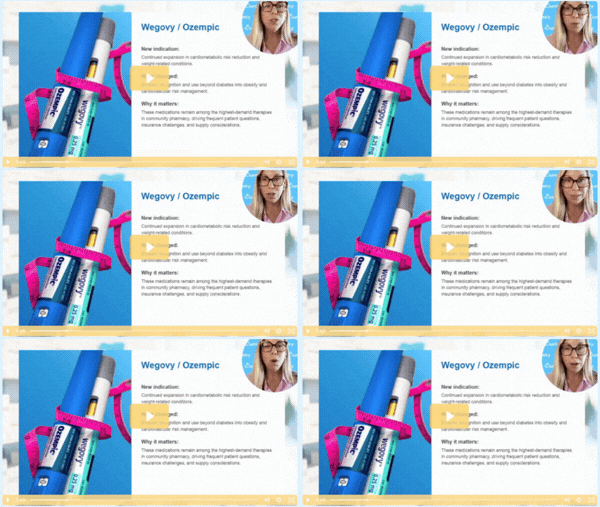
Expanded use of Wegovy / Ozempic: Continued expansion in cardiometabolic risk reduction and weight-related conditions
What changed for Wegovy / Ozempic: Broader recognition and use beyond diabetes into obesity and cardiovascular risk management
Why it matters for community pharmacies: These medications remain among the highest-demand therapies in community pharmacy, driving frequent patient questions, insurance challenges, and supply considerations
Jardiance
How do you pronounce Jardiance? JAR-dee-ans
Expanded use of Jardiance: Additional data and labeling updates supporting use across heart failure and chronic kidney disease populations.
What changed for Jardiance: Continued expansion beyond diabetes into cardiorenal protection
Why it matters for pharmacies: Increased prescribing across multiple disease states means more patients on therapy and more counseling opportunities around hydration, side effects, and adherence.
Eliquis and Xarelto
How do you pronounce Eliquis? eh-LIH-kwis
How do you pronounce Xarelto? zah-REL-toh
Expanded use: Ongoing updates and broader utilization in stroke prevention and thromboembolic risk reduction.
What changed: Expanded real-world use across additional patient populations and risk profiles
Why it matters for pharmacies: Anticoagulants remain a high-risk, high-touch category, requiring consistent patient education and monitoring support.
Dupixent
How do you pronounce Dupixent? doo-PIKS-ent
Expanded use of Dupixent: Additional indications across dermatologic and respiratory conditions
What changed for Dupixent: Continued expansion into new inflammatory disease states and younger patient populations
Why it matters for pharmacies: Growth in specialty biologics with self-administration at home increases the pharmacist’s role in injection counseling and adherence support
Mounjaro
How do you pronounce Mounjaro? mown-JAHR-oh
Expanded use of Mounjaro: Broader adoption in metabolic and weight-related conditions
What changed for Mounjaro: Continued expansion into younger populations
Why it matters for pharmacies: Growing pediatric use is increasing the need for caregiver education, while strong demand for GLP-1/GIP therapies and rising prescriptions from both specialists and primary care continue to impact pharmacy workflows.
Tips for community pharmacies with these expanded indications:
- Update counseling points to reflect expanded uses (not just original indications)
- Prepare for increased volume as prescribing widens
- Anticipate insurance and prior authorization challenges
- Leverage these therapies as touchpoints for broader patient care conversations (adherence, lifestyle, monitoring).
New FDA drug approvals in Q1 2026
While expanded indications dominated much of the FDA’s activity this quarter, several new drug approvals introduced entirely new therapies to the market, particularly in rare diseases, dermatology, and mental health.
For community pharmacies, these approvals may not all translate to immediate dispensing volume but they signal where treatment is heading and what patients may begin asking about.
Zycubo
Approval date: January 12, 2026
How do you pronounce Zycubo? ZYE-kyoo-boh
Indication: Menkes disease (a rare genetic disorder affecting copper levels)
What makes Zycubo notable: A critical treatment for a rare pediatric condition with limited options
Why it matters for pharmacies: Rare disease therapies continue to expand, reinforcing the need for pharmacists to support families navigating complex care, even when medications are specialty-distributed.
Aqvesme
Approval date: December 23, 2025
How do you pronounce Aqvesme? AK-vez-mee
Indication: First oral treatment for anemia in thalassemia
What makes Aqvesme notable: Introduces a first-in-class oral option in a traditionally complex disease state
Why it matters for pharmacies: Oral therapies shift care into the outpatient setting, increasing opportunities for pharmacist counseling and adherence support.
Loargys
Approval date: February 23, 2026
How do you pronounce Loargys? lor-JEES
Indication: Arginase 1 deficiency (rare metabolic disorder)
What makes it notable: Targets a very specific metabolic pathway with limited prior treatment options
Why it matters for pharmacies: Continues the trend of ultra-targeted therapies, often requiring coordination with specialists and caregivers.
Bysanti
Approval date: February 20, 2026
How do you pronounce Bysanti? bye-SAN-tee
Indication: Schizophrenia and bipolar I disorder (manic or mixed episodes)
What makes Bysanti notable: A new psychiatric medication entering a high-utilization category
Why it matters for pharmacies: Mental health medications are a core part of community pharmacy dispensing, making this one of the more directly relevant approvals this quarter.
Yuviwel
Approval date: February 27, 2026
How do you pronounce Yuviwel? YOO-vih-well
Indication: Achondroplasia (pediatric growth disorder)
What makes it notable: A novel peptide therapy targeting growth pathways
Why it matters for pharmacies: Pediatric specialty therapies continue to grow, requiring careful coordination with caregivers and providers.
Foundayo
Approval date: April 1, 2026
How do you pronounce Foundayo? fown-DAY-oh
Indication: Obesity/weight management
What makes it notable: One of the first oral GLP-1 therapies, offering an alternative to injectable options
Why it matters for pharmacies: This is likely the most operationally impactful approval of the quarter, with strong patient demand, payer implications, and high potential for community pharmacy dispensing.
Key trends across new approvals
- Rise of rare disease therapies: Many approvals targeted small, highly specific patient populations
- Shift toward oral options: More therapies are moving away from injections or infusions
- Growth in high-demand categories: Obesity and mental health continue to expand
- Increased complexity: Even new drugs often require monitoring, REMS awareness, or specialist involvement
What this means for community pharmacies
- Not every new drug will land on your shelf but patients will still ask about them
- Oral and self-administered therapies create more direct dispensing opportunities
- New approvals often come with coverage challenges and prior authorization requirements
- Staying current allows pharmacies to maintain credibility and strengthen patient trust
What this means for community pharmacies
Beyond new drug approvals and expanded indications, several broader FDA developments in Q1 are worth noting. While these updates may not always generate headlines, they have direct operational, compliance, and counseling implications for community pharmacies.
Increased enforcement around compounded GLP-1 products
The FDA significantly escalated enforcement activity related to compounded GLP-1 medications during the quarter. In February, the agency announced plans to restrict the use of GLP-1 active pharmaceutical ingredients in non-FDA-approved compounded drugs and take action against misleading marketing practices.
This was followed by:
- Warning letters issued to telehealth companies promoting compounded GLP-1 products
- Clarification that compounded drugs cannot be marketed as equivalent to FDA-approved therapies
By April, the FDA further reinforced that compounded versions should only be produced under specific conditions and must not be “essentially copies” of commercially available drugs.
What this means for pharmacies:
This is one of the most important regulatory signals of the year. Pharmacies involved in compounding or dispensing compounded products should expect heightened scrutiny, tighter enforcement, and increased patient questions about safety and legitimacy.
GLP-1 shortage dynamics begin to shift
As supply of GLP-1 therapies begins to stabilize, the FDA clarified that compounding allowances tied to shortages are temporary and must be phased out once products are commercially available.
What this means for pharmacies:
- Reduced availability of compounded alternatives
- Increased reliance on branded products
- Continued insurance and affordability challenges for patients
This transition will likely create friction at the pharmacy counter, especially among patients who previously relied on compounded versions.
Continued emphasis on prescription drug marketing and promotion
The FDA maintained pressure on misleading or non-compliant drug promotion, particularly in direct-to-consumer and telehealth-driven models. Enforcement actions in Q1 made it clear that marketing claims, especially around compounded products, will be closely monitored.
What this means for pharmacies:
Pharmacists may increasingly need to correct misinformation patients encounter online, particularly around high-demand medications like weight-loss therapies.
Safety monitoring and labeling updates continue
As expected, the FDA continued issuing labeling updates and safety communications based on real-world data and post-market surveillance.
What this means for pharmacies:
Even without major headline changes, these updates reinforce the need for:
- Ongoing staff education
- Updated counseling points
- Awareness of evolving risk profiles
Bringing it all together
Q1 FDA Updates highlighted a clear shift in focus:
- More therapies entering the market
- More existing drugs are expanding their reach
- More regulatory oversight in high-demand categories
For community pharmacies, the takeaway is simple: staying informed is no longer just about knowing new drugs, it’s about understanding how the rules around those drugs are evolving in real time.
Pharmacies that stay proactive, clinically and operationally, will be best positioned to navigate these changes while continuing to deliver high-quality patient care.
Want more resources for clinical and operational insights?
Join our email list for how-to guides, toolkits with ready-made marketing materials, and newsletters full of more blogs like these.
ABOUT THE AUTHOR

Michelle Barney, PharmD
Clinical Solutions Manager, Lumistry
Michelle Barney is a Clinical Solutions Manager at Lumistry, where she brings the practicing pharmacist’s perspective into the creation and evolution of pharmacy technology solutions. A clinical pharmacist by training, Michelle has built her career across retail pharmacy and health technology, including serving as Vice President of Clinical Operations at VUCA Health prior to its acquisition by Lumistry. She has held leadership roles spanning clinical operations, product, and marketing, and brings firsthand experience managing pharmacy teams and workflows. In her current role, Michelle partners closely with cross-functional teams to ensure Lumistry’s products are rooted in real-world pharmacy needs—helping pharmacies work more efficiently, confidently, and effectively in their day-to-day practice.