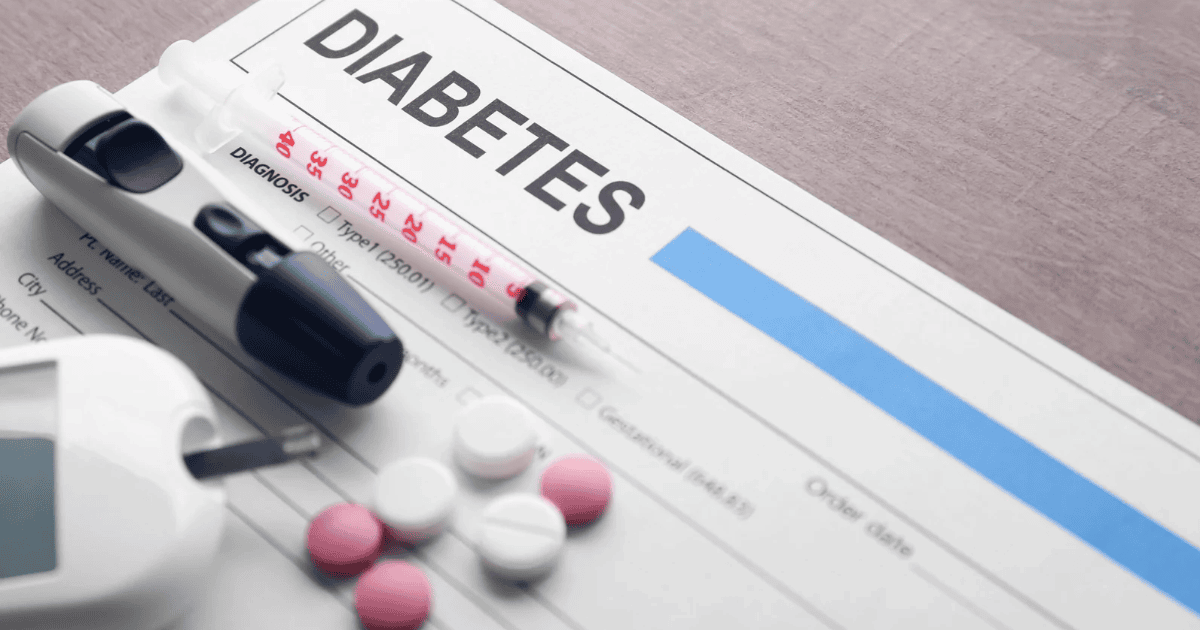
Diabetes medication adherence is how closely patients take their diabetes medicines as prescribed, at the right dose and the right time. Across chronic conditions, about half of patients don’t take their medications as prescribed, and diabetes is no exception. November is American Diabetes Month, a natural time for pharmacies to look at where patients struggle and how better education can help.
The numbers show the opportunity:
For community pharmacies, adherence is a chance to help patients understand their treatment, voice their concerns, and feel more confident managing their health.
What is diabetes medication adherence?
Diabetes medication adherence means taking prescribed diabetes medications at the correct dose, frequency, and time, and refilling them before they run out.
Treatment looks different from patient to patient. Some take oral medications such as metformin, while others use insulin, GLP-1 medications, or a combination. Each regimen has its own instructions and timing.
When patients miss doses, take medications incorrectly, or go without refills, blood glucose becomes harder to manage. Over time, that can raise A1C and increase the risk of complications affecting the heart, kidneys, eyes, and nerves.
Picking up a prescription is only the first step. Patients also need to understand their treatment well enough to follow it every day.
Why patients with diabetes miss doses
Medication nonadherence rarely comes down to one reason. Most patients want to manage their diabetes but run into practical, financial, or informational barriers.
Common challenges include:
- Complex schedules. Patients on several medications may lose track of which to take, when, and whether to take it with food.
- Side effects. Nausea, stomach upset, and worry about low blood sugar can make patients hesitant to continue.
- Cost. High out-of-pocket costs can lead patients to delay refills, skip doses, or ration medication.
- Unclear instructions. Patients may not know how a medication fits their routine, especially when timing depends on meals.
- Feeling fine. Without noticeable symptoms, patients may question whether they still need the medication.
- Injection worries. Patients starting insulin or other injectables may be uneasy with needles or unsure of their technique.
Treatment type matters too. In U.S. survey data from 2017 to 2019, patients taking insulin reported better adherence than those taking noninsulin diabetes medications.3
Many of these barriers come down to information, which is where pharmacies can help most.
Pharmacies are in the right place to help
Community pharmacies are well placed to support diabetes medication adherence because pharmacists see patients throughout their treatment, often at every refill.
A systematic review of 21 studies on community pharmacist-led interventions for type 2 diabetes found that about 90% reported significant improvements in medication adherence. Sixteen studies showed significant improvements in both adherence and A1C.4 The interventions included counseling, patient education, medication management, and telephone follow-up.
For community pharmacies, that’s encouraging. Better adherence doesn’t require a new clinical program. Consistent communication and small educational touchpoints can make a difference.
A refill pickup is a chance to check understanding. A question about side effects is a chance to address concerns. A missed refill is a reason to reach out before the patient runs out.
How to improve diabetes medication adherence at your pharmacy
Improving diabetes medication adherence starts with finding where patients get stuck. These five questions can help you build more support into the workflow you already have.
Build a stronger diabetes care program.
Get practical steps for improving adherence, expanding diabetes services, counseling patients on GLP-1s, and more in our free how-to guide.
Are you catching late refills before they become missed doses?
Start with patients who are consistently late picking up their diabetes medications.
Refill synchronization can align multiple prescriptions around one predictable pickup date. Your pharmacy management system may also offer adherence reports or refill reminders that flag patients who need attention.
When a patient is overdue, a quick check-in can tell you whether the cause is forgetfulness, cost, a treatment change, or something else. The earlier you catch it, the less likely the patient goes without medication.
Do patients understand why each medicine matters?
Dosage and timing tell patients what to do. The reason behind each medication helps them keep doing it.
When counseling, explain each medication’s purpose in everyday language and address common worries about side effects, long-term use, and missed doses. A patient who feels fine may not see why they need a medication for a condition that often has no noticeable symptoms.
Teach-back helps here. Ask patients to explain in their own words how they’ll take their medication, so you can catch misunderstandings early. Plain language and short, step-by-step instructions help too. Learn more about how health literacy shapes the way patients use medication information.
Can patients get answers after they leave the counter?
A short conversation at pickup won’t cover every question a patient has at home. They may forget an instruction, need to review an injection technique, or want to check something before the next dose.
Give patients resources they can use outside the pharmacy, such as medication guides, educational videos, and digital materials that reinforce what you discussed.
It’s also worth knowing where patients look on their own. More patients are turning to AI searches for health information, and your pharmacy can point them to reliable, understandable sources instead.
Are caregivers getting the same information?
For many patients, managing diabetes is a shared job. Family members may organize medications, manage refills, prepare injections, or track appointments.
With the patient’s permission, include caregivers in counseling and education. Make sure they hear the same instructions, know where to find reliable resources, and have a chance to ask questions. This matters most for older adults and patients managing several conditions.
Can you add diabetes education without adding more work (or additional costs)?
Education doesn’t have to mean a longer conversation at every pickup.
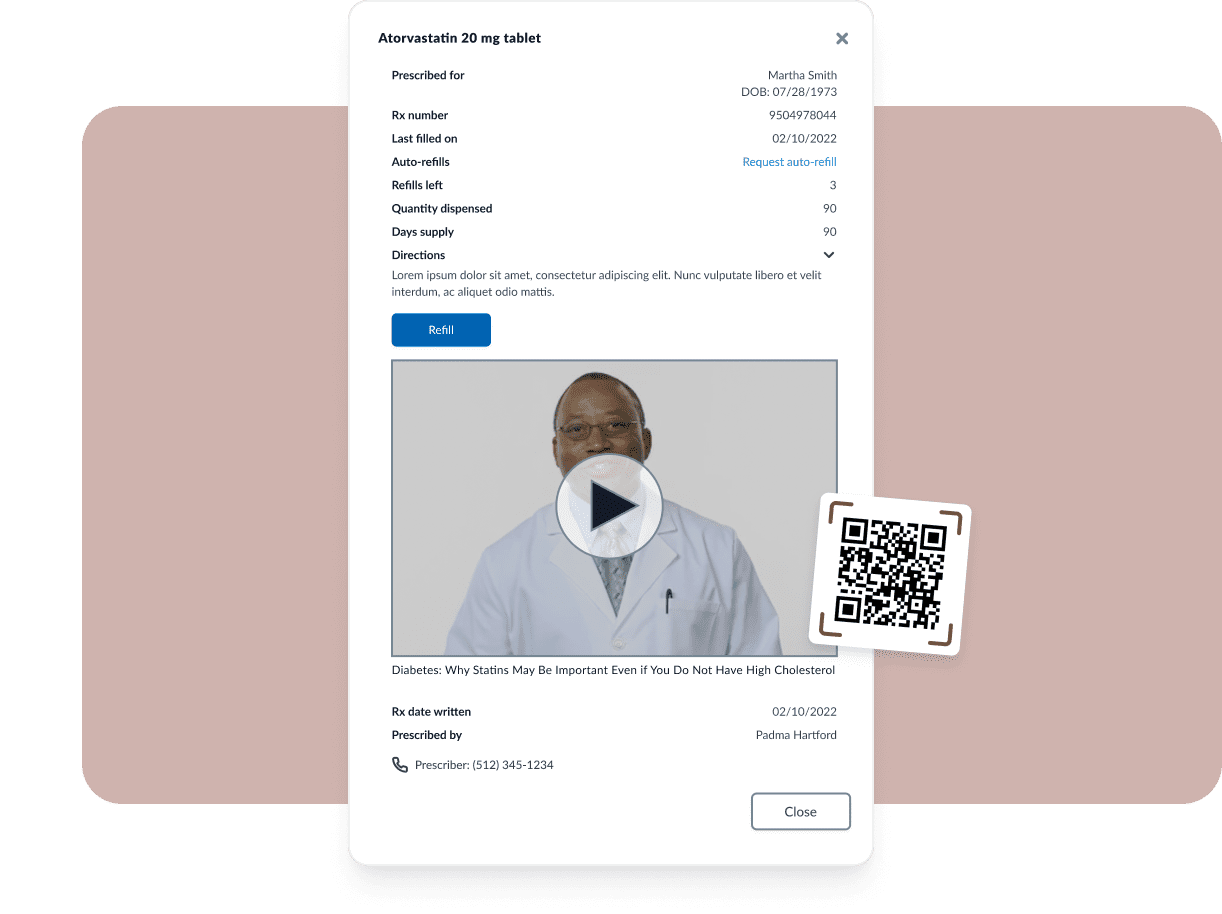
Build it into workflows your team already uses. A short handout, a QR code on the prescription bag, or a resource shared through your pharmacy’s Patient Portal gives patients another way to access medication information.
Look for materials that are ready to use, easy to understand, and available in multiple languages, so your team isn’t creating them from scratch.
Short videos give patients another way to learn
Patients don’t always remember everything they hear at the counter, and written instructions can be hard to follow when they include unfamiliar terms or multistep techniques. Short videos offer another option.
A 2026 randomized controlled trial in the Journal of Medical Internet Research tested a video education program for older adults with type 2 diabetes in Henan, China. Participants who watched eight short animated videos alongside standard care had significantly higher medication adherence than those who received standard care alone, and the difference held at three-month follow-up.5
This adds to growing evidence that accessible video education can support adherence. Videos also let patients rewatch instructions whenever they need them, without another call to the pharmacy.
Give patients with diabetes another way to learn
Pharmacist counseling should stay at the center of diabetes education. Digital resources extend those conversations beyond the pharmacy.
Lumistry’s Paperless Education gives pharmacies a library of more than 1,800 pharmacist-made videos covering medications, administration techniques, and health conditions, available in 21 languages. Patients scan a QR code on their prescription materials to watch medication-specific videos at home.
The Patient Portal also gives patients health-condition education, including diabetes videos, right on their phones.
American Diabetes Month is a good time to start, but accessible diabetes education can impact patient outcomes all year long.
Make every diabetes refill a teaching moment.
Paperless Education gives patients pharmacist-made medication videos they can watch at home, in their language, by simply scanning a simple QR code.
Citations
- Centers for Disease Control and Prevention. National Diabetes Statistics Report. Updated September 16, 2026. CDC.
- Bosworth HB, Granger BB, Mendys P, et al. Medication adherence: a call for action. Am Heart J. 2011;162(3):412–424. PubMed.
- Unni EJ, et al. Type 2 diabetes medication adherence in the U.S., 2017–2019. Nutr Metab Cardiovasc Dis. 2021. Healio.
- Al Assaf S, Zelko R, Hanko B. The effect of interventions led by community pharmacists in primary care for adults with type 2 diabetes mellitus on therapeutic adherence and HbA1c levels: a systematic review. Int J Environ Res Public Health. 2022;19(10):6188. Full study.
- Wang M, Lee K, Thew HZ, et al. Effectiveness of the mobile-based Diabetes Little Helper video intervention on medication adherence among older adults living with type 2 diabetes mellitus, Henan, China: randomized controlled trial. J Med Internet Res. 2026;28:e78731. Full study.